
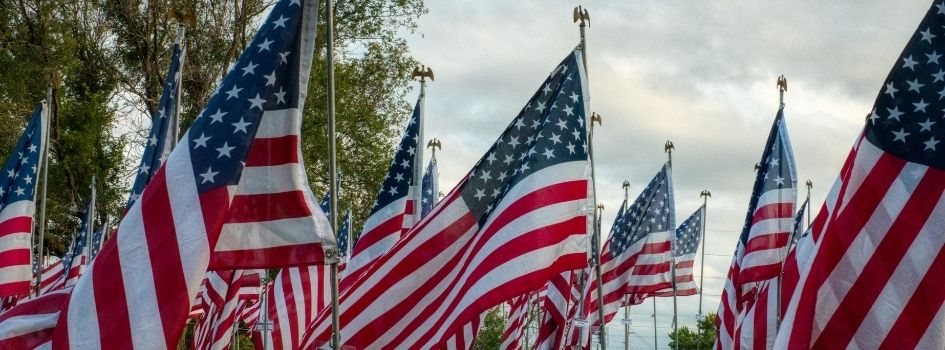
For many families, military service is an important part of a loved one’s life story. Whether that service lasted a few years or represented an entire career, incorporating military traditions into a funeral or memorial can provide a meaningful way to recognize commitment, sacrifice, and service to the country.
Military funeral honors can accompany a traditional funeral, burial, cremation, or memorial service. Understanding what honors may be available, what they mean, and how they can be combined with personal tributes can make planning feel more manageable.
Key Takeaways
- Eligible veterans, active-duty service members, and certain Selected Reserve members may qualify for military funeral honors.
- Standard military funeral honors typically include the ceremonial folding and presentation of the American flag and the playing of Taps.
- Military funeral honors are available for eligible veterans at no cost when requested.
- Choosing cremation does not prevent an eligible veteran from receiving military funeral honors.
- Some military retirees may qualify for additional ceremonial honors, depending on eligibility and availability.
- Gathering discharge paperwork and military service information early can make it easier to request honors and personalize the memorial.
Who Is Eligible for Military Funeral Honors?
Military funeral honors are available to many people who served in the United States Armed Forces. Eligibility can include active-duty service members, members of the Selected Reserve, and veterans who meet applicable service and discharge requirements.
For veterans, discharge status is important. Generally, a veteran must have been discharged under conditions other than dishonorable to qualify.
Families will typically need documentation verifying military service, such as a DD Form 214 or another official discharge record. If you know that military honors will be an important part of your loved one’s arrangements, locating these documents early can help simplify the process.
What Do Military Funeral Honors Include?
For an eligible veteran, military funeral honors generally include a detail of at least two uniformed service members, with at least one representative from the veteran’s branch of service.
The ceremony typically includes:
- Ceremonial folding of the American flag
- Presentation of the folded flag to an eligible family member
- The playing of Taps
Although these traditions are formal and relatively brief, they can become one of the most memorable parts of a funeral or memorial service.
What Does the Military Funeral Flag Presentation Mean?
The flag presentation is one of the most recognizable traditions associated with a veteran’s funeral.
During the ceremony, the American flag is carefully folded into its traditional triangular shape. It is then typically presented to the veteran’s next of kin or another appropriate family member.
For families, the flag becomes more than part of the ceremony. It can serve as a lasting symbol of the veteran’s service and a meaningful keepsake to preserve and display for future generations.
Are Additional Military Funeral Honors Available?
Some military retirees may qualify for additional honors beyond the standard ceremony. Depending on eligibility and availability, these could include a larger honor guard, pallbearers, a chaplain, or a firing party.
A three-volley salute may also be included when permitted. This a ceremonial firing of three synchronized rifle volleys by an honor guard, which symbolize duty, honor, and country.
Because the specific honors available can vary, families should not feel that they need to determine every detail themselves before beginning funeral arrangements. Eligibility can be reviewed as part of the planning process.
Can You Have Military Funeral Honors With Cremation?
Yes. Choosing cremation does not prevent an eligible veteran from receiving military funeral honors.
This can be particularly reassuring for families who want cremation but also want to recognize a loved one’s military service through traditional ceremonies.
A family might hold a funeral or memorial service before cremation, or arrange a memorial after cremation. Military traditions can also be incorporated into a service centered around an urn.
The ceremony does not have to be exclusively military in nature. Families can combine formal honors with:
- Favorite music
- Scripture or other meaningful readings
- Photographs and tribute videos
- Stories from family members and friends
- Personal belongings or memorabilia
- Memories from military service and civilian life
This combination can recognize the veteran’s service without allowing one chapter of life to define the entire memorial.
Ways to Personalize a Veteran’s Funeral or Memorial Service
Military funeral traditions provide a meaningful framework, but there are many additional ways to recognize the individual behind the uniform. An obituary, for example, may include the veteran’s branch of service, rank, assignments, awards, deployments, or other details that were important to the family. Photographs from their time in the military can be incorporated into a display or tribute video.
Another meaningful option is to incorporate military branch medallions into the casket presentation. Families may choose medallions representing the veteran’s branch of service and have them placed on or attached to the casket during the funeral. After the service, the medallions can be removed and presented to children, grandchildren, or other family members as keepsakes. This creates a tangible connection to the veteran’s service that loved ones can carry with them long after the funeral.
Families may also choose patriotic music, branch-specific elements, or personal stories about how military service shaped their loved one’s character and life.
For some families, the most meaningful approach is a balance between military tradition and deeply personal memories. From formal military honors to photographs, stories, service memorabilia, and keepsake medallions, each element can help tell the fuller story of the person being remembered.
Memorial Options for Veterans Who Are Cremated
After cremation, families have several options for creating a permanent place or object of remembrance. Cremated remains may be:
- Kept in an urn at home
- Placed in a cemetery or mausoleum
- Used in part for keepsakes or memorial jewelry
- Incorporated into another meaningful permanent memorial
- Eligible families may also be able to request certain government-provided memorial markers or headstones.
There is no single memorial choice that is appropriate for every veteran or every family. The right option is one that respects the veteran’s wishes while providing family members with a meaningful way to remember them.
What Should Families Gather Before Requesting Military Honors?
If possible, begin by locating the veteran’s military discharge documentation, particularly a DD Form 214 or another official record of service.
It can also be helpful to gather details such as the veteran’s:
- Branch of service
- Rank
- Dates or era of service
- Assignments or deployments
- Military awards and decorations
- Photographs from their time in service
These details can help with both determining eligibility for honors and creating an obituary or memorial that accurately reflects the veteran’s service.
Need Help Planning a Veteran’s Funeral in Greater Cincinnati and Northern Kentucky?
Planning a funeral while grieving can involve many decisions, and arranging military honors can add another set of details to consider. Families should not have to navigate those details alone. Clear guidance and assistance with veteran services are especially important when there is already so much to manage.
Fares J. Radel Funeral Homes can help families explore ways to incorporate military honors into a traditional funeral, cremation, or memorial service while also creating a tribute that reflects the veteran as a whole person. Our team can help guide you through the planning process and coordinate meaningful details so you can focus on remembering your loved one.
If you are planning services for a veteran or have questions about incorporating military traditions into a funeral or cremation memorial, contact us. We are here to help you understand the options and create a farewell that honors both a life lived and a legacy of service.

Post a comment